Govern every AI interaction from one control plane.
Lunar secures MCP, LLM, and API traffic from a single self-hosted gateway. Deployed in your VPC, with one audit trail across your entire agentic stack.
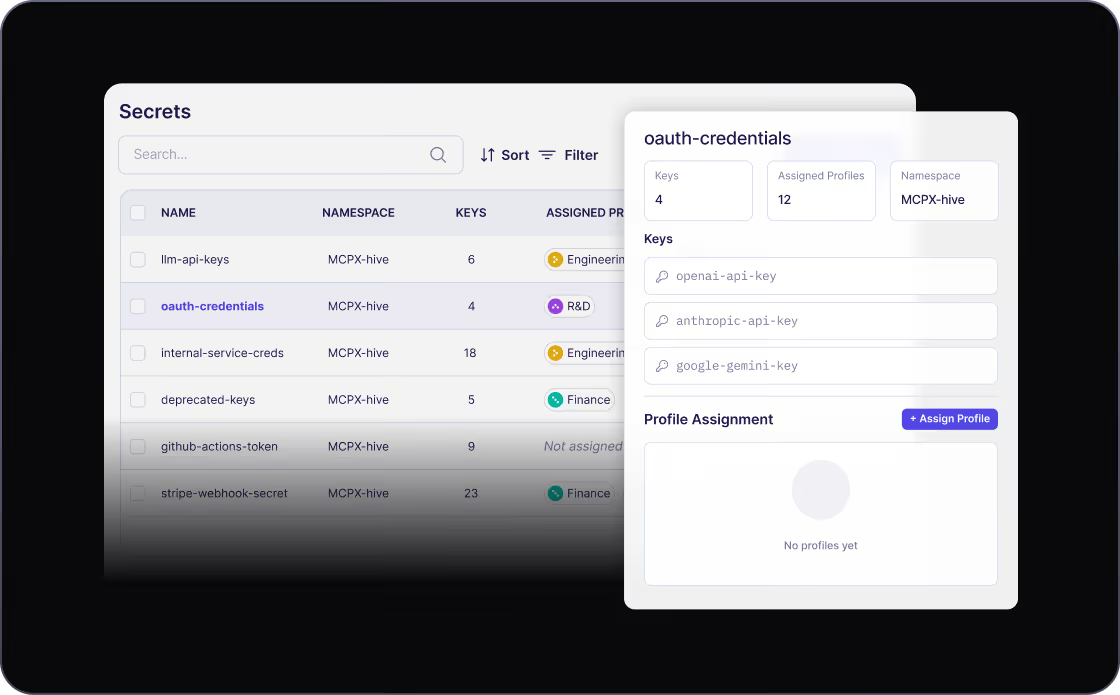
Lunar injects credentials at request time from your existing vault (HashiCorp, AWS Secrets Manager, GCP Secret Manager). Secrets never sit in the gateway and never reach the agent.
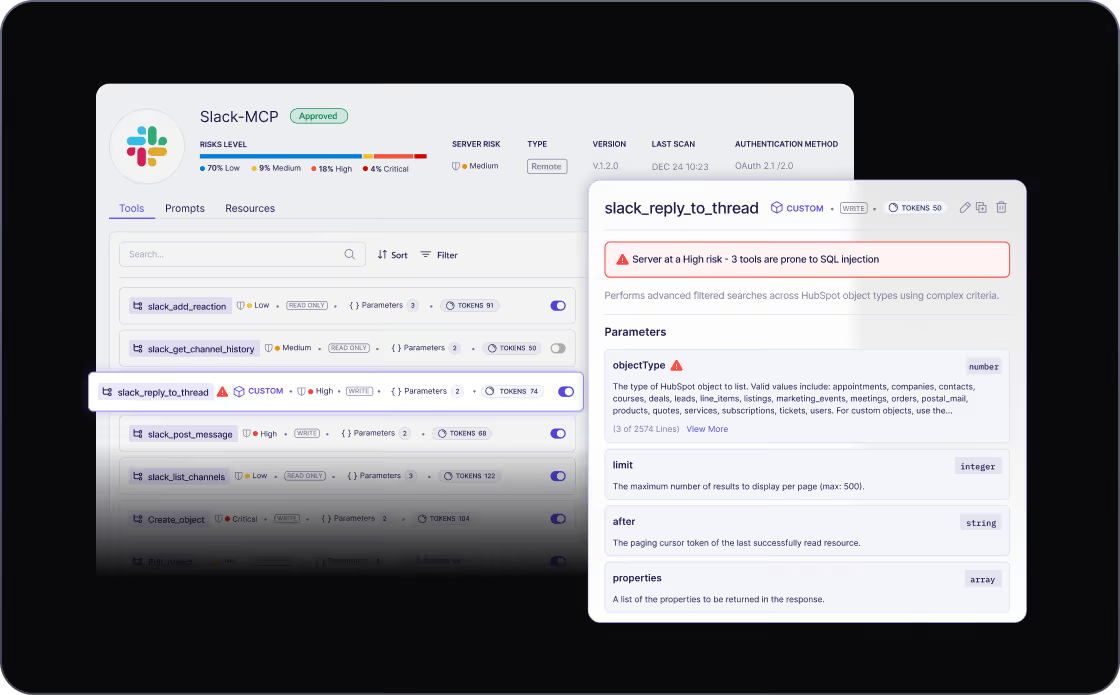
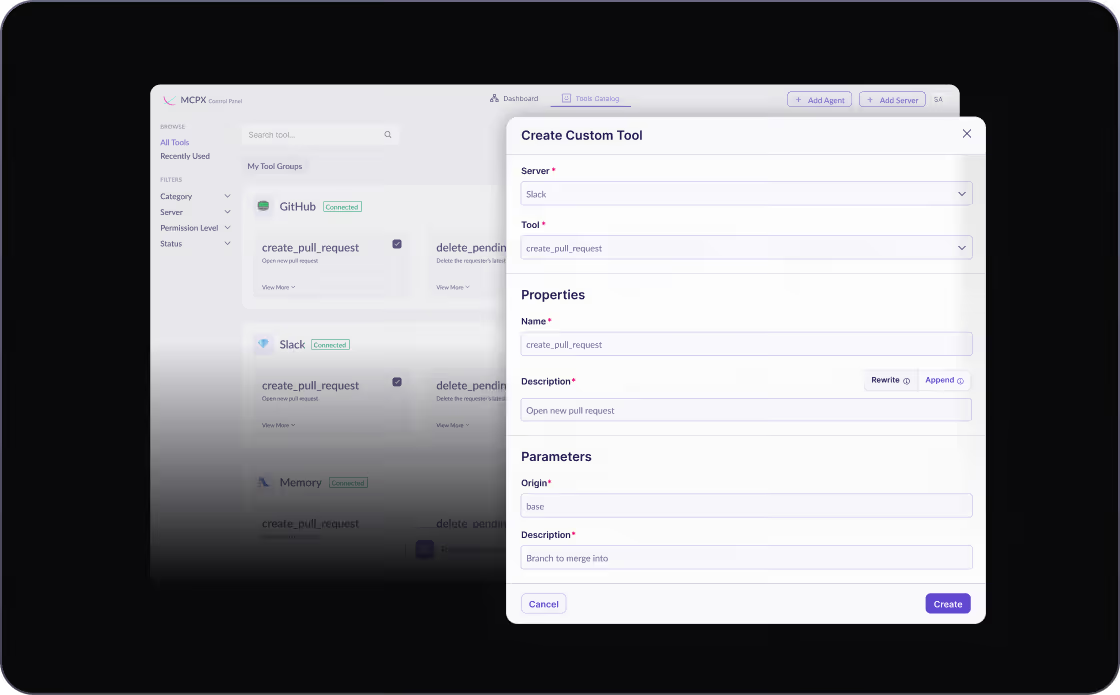
Test server behavior (permissions, token usage) in isolation before deployment. Protects against rug pulls, tool poisoning, and version drift, ensuring a secure version of the internal MCP catalog.
Policy enforcement happens before the request reaches the model or the tool. Generic LLM guardrails miss MCP-specific attacks; Lunar runs guardrails on the full request, including tool arguments and server metadata.
PII redaction (configurable, regulator-aware)
Version pinning
Tool description hardening and parameter validation
4. Real-time anomaly detection
Defends against: data exfiltration
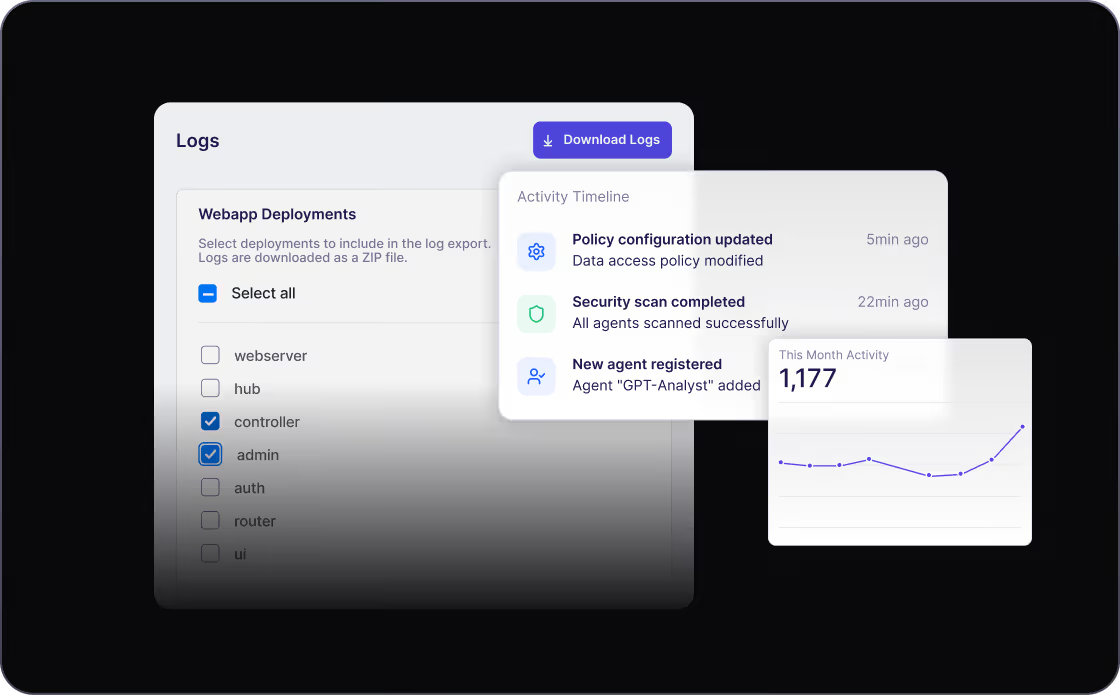
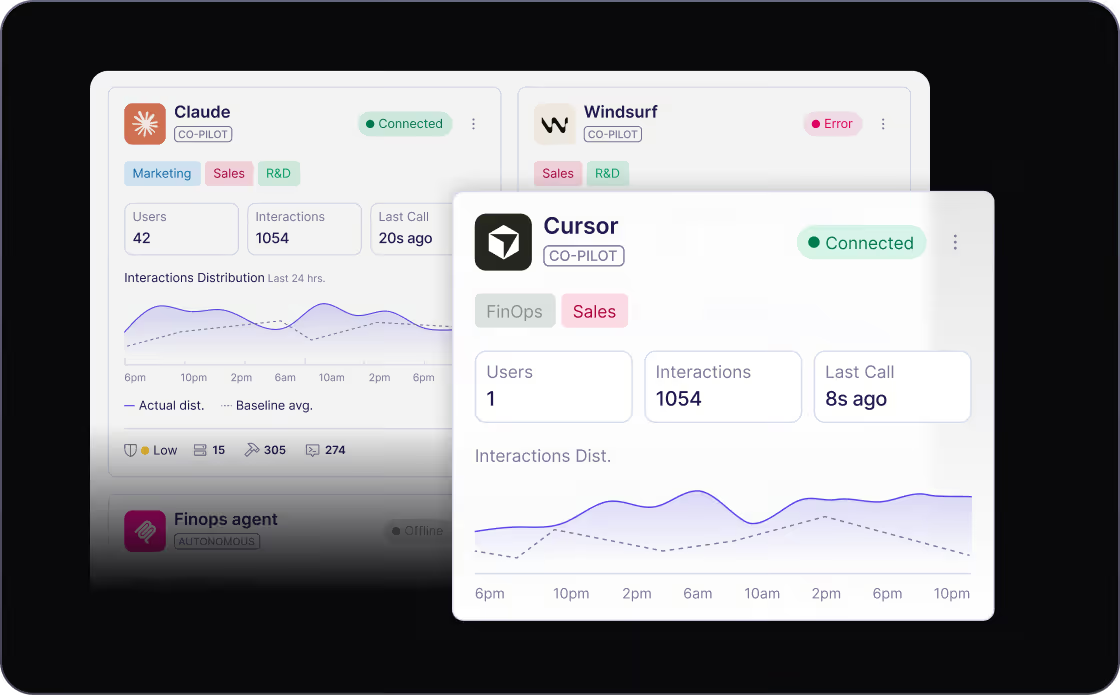
Audit trails answer what happened. Anomaly detection answers what's happening right now. Lunar flags unusual tool calls, exfiltration patterns, and policy drift inline.
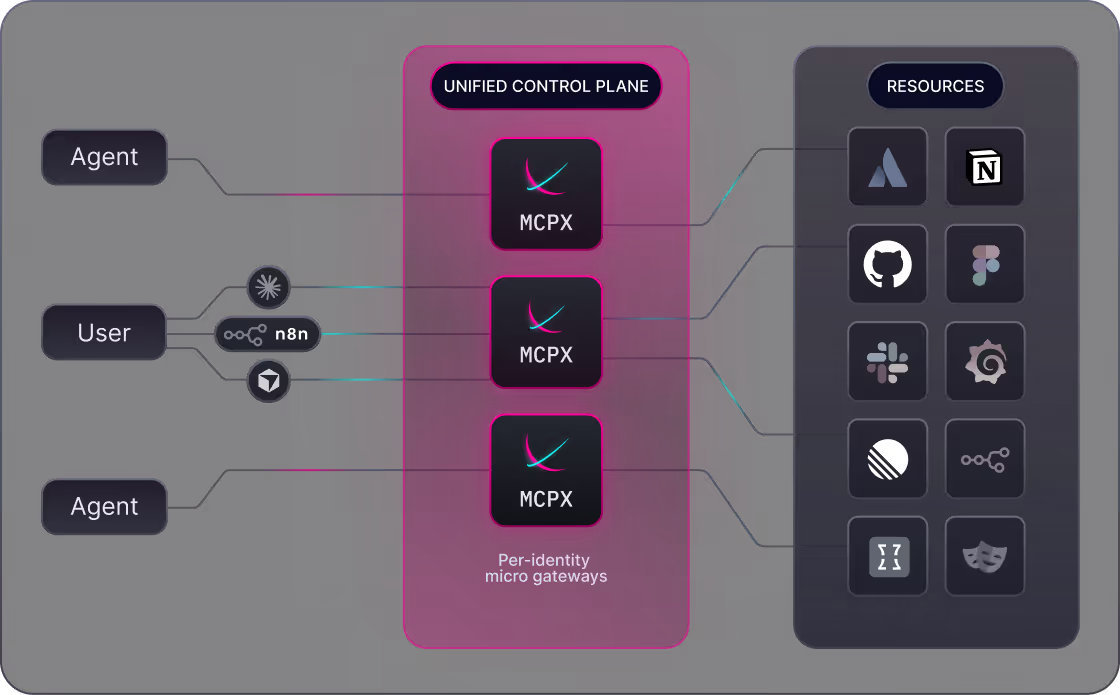
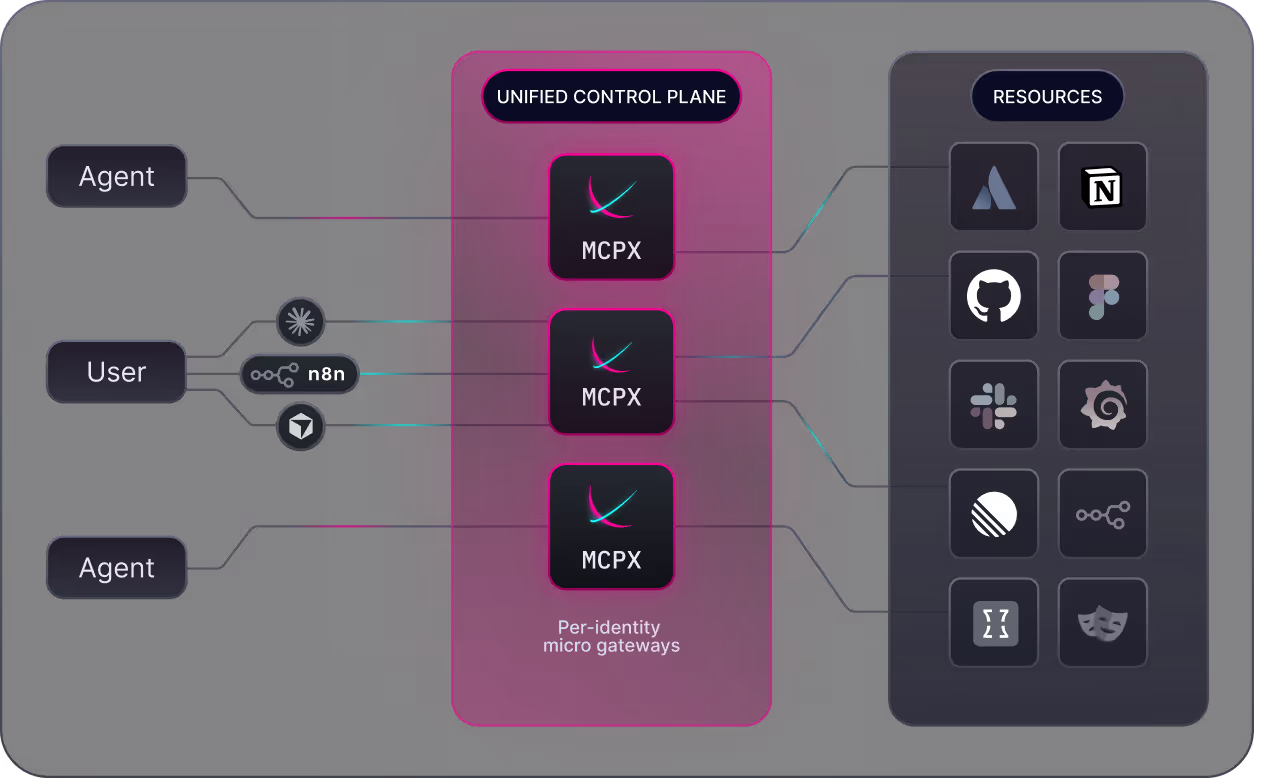
Lunar runs entirely inside your infrastructure, with identity from Okta or Entra, secrets from your vault, and logs to your SIEM. Only anonymized metrics ever leave the VPC. The gateway sits between your agents and your data, decoupling the agentic stack from the data layer so orchestration, LLMs, and agent frameworks can change without re-implementing access control, secrets, or audit.
Untrusted and remote clients connect through the gateway, never directly to your MCP servers, with end-to-end encrypted tunnels and the gateway as the single trusted endpoint.
Enterprise-grade assurance
Private deployment and data sovereignty
SSO, roles, and audit logs
DLP and sensitive data controls
Fault-tolerant design and enterprise support
Why security teams act now
MCP adoption is happening with or without you. Engineers are connecting tools today. Waiting for a breach isn't a strategy.
1.
Your teams are using MCP servers right now
Without visibility or governance, you have risks you don't know about. Shadow MCP servers are already in your environment.
2.
Traditional security tools don't see MCP threats
API gateways, LLM guardrails, and SIEM tools weren't built for the MCP protocol. They miss tool poisoning, rug pulls, and prompt injection at the server layer.
3.
One compromised tool call can exfiltrate everything
An agent with database access and email permissions can leak your entire customer table in a single tool call. You won't see it in your API logs.
4.
Audit requirements haven't caught up to AI
SOC 2 auditors expect identity attribution and immutable logs. If you can't trace which user triggered which agent to access which data, you're not audit-ready.
5.
The C-suite expects secure AI adoption
Executives want teams using AI to do more with less. They expect you to de-risk it. "We're evaluating options" won't hold up when the first breach happens.
“Our mandate was to enable AI adoption across the business while maintaining security posture. MCPX allowed us to govern MCP usage holistically, without slowing engineering or business teams.”
— Tamir Ronen, CISO, HiBob
“Lunar is a great partner. It’s working within our VPC, the data is not going out anywhere and I can sleep better at night”
— Avner Cohen, CISO and Head of DevOps, HiredScore
“The engineering team was making hundreds of millions of weekly API calls to Microsoft 365. This was essential for real-time scanning of emails.”
What makes MCP security different from API security?
MCP servers instruct agents what to do next, not just execute requests. Traditional API security doesn't inspect tool descriptions, server metadata, or response payloads for malicious instructions. MCP threats happen at the protocol layer.
How does Lunar prevent rug pull attacks?
Lunar sandboxes every server before deployment and monitors for drift after approval. If behavior changes, new tools appear, or permissions expand, Lunar flags it before production use.
What happens if a malicious tool call gets through?
Every tool call runs through policy enforcement before execution. Malicious calls trigger alerts, get blocked, or require human approval. The call never reaches the downstream system.
Do I need to replace my existing security stack?
No. Lunar integrates with your identity provider (Okta, Entra), secret manager (HashiCorp Vault, AWS Secrets Manager), and SIEM (Splunk, Datadog, Elastic).
What compliance frameworks does Lunar support?
Lunar provides the controls required for SOC 2 Type II, GDPR, HIPAA, and PCI DSS compliance. Immutable audit trails, identity attribution, PII redaction, and secret management align to common control frameworks. Lunar itself is SOC 2 Type II certified.
Can I deploy Lunar in a multi-cloud environment?
Yes. Lunar runs in your VPC (AWS, GCP, Azure) or on-premises. You can deploy multiple gateways across clouds with centralized policy management. Each gateway handles its region's traffic while reporting to a unified control plane.
Does Lunar work with air-gapped or on-premises-only infrastructure?
Yes. Lunar can run entirely on-premises or in air-gapped environments. No data leaves your infrastructure. Only anonymized telemetry (optional) connects to Lunar's control plane for updates and support.
How does Lunar handle agent authentication?
Lunar integrates with your identity provider (Okta, Entra ID, Google Workspace) via SAML or OIDC. Each agent request includes user or service account context. Policies evaluate against real identity, not just API keys.
How fast can teams ship new MCP servers?
Standard servers deploy in minutes via CLI under existing policy. Novel servers (new permissions, external data sources) route to approval. Security defines patterns once, teams self-serve from there.
Does Lunar support multiple agent frameworks?
Yes. Managed agents, custom harnesses, and third-party orchestration all connect to the same gateway. Change your agent layer without rearchitecting MCP access.
Faster AI Adoption. Zero Loss of Control.
Self-hosted demo, no data leaves your VPC. 30-minute walkthrough with our security engineering team.












%20(1).avif)







%20(1).avif)
.png)

.png)

.png)


